How to reduce neck and shoulder pain in Pilates
Taught on the Saturday afternoon of PLTS+ Collective by Dr. Morgan Rodriguez, PT, DPT, FAAOMPT.
If you've taught for more than a few months you have a version of this client: lovely form everywhere except the moment her head comes up, when the jaw tightens and a hand drifts to the back of her neck. Neck and shoulder pain in Pilates is, in the workshop's own words, among the most common complaints in Pilates settings, and it chips away at progress and confidence long before anybody mentions it out loud. On the Saturday of PLTS+ Collective, Dr. Morgan Rodriguez gave instructors two hours on finding the cause and changing something while the class is still going.
Who Morgan is
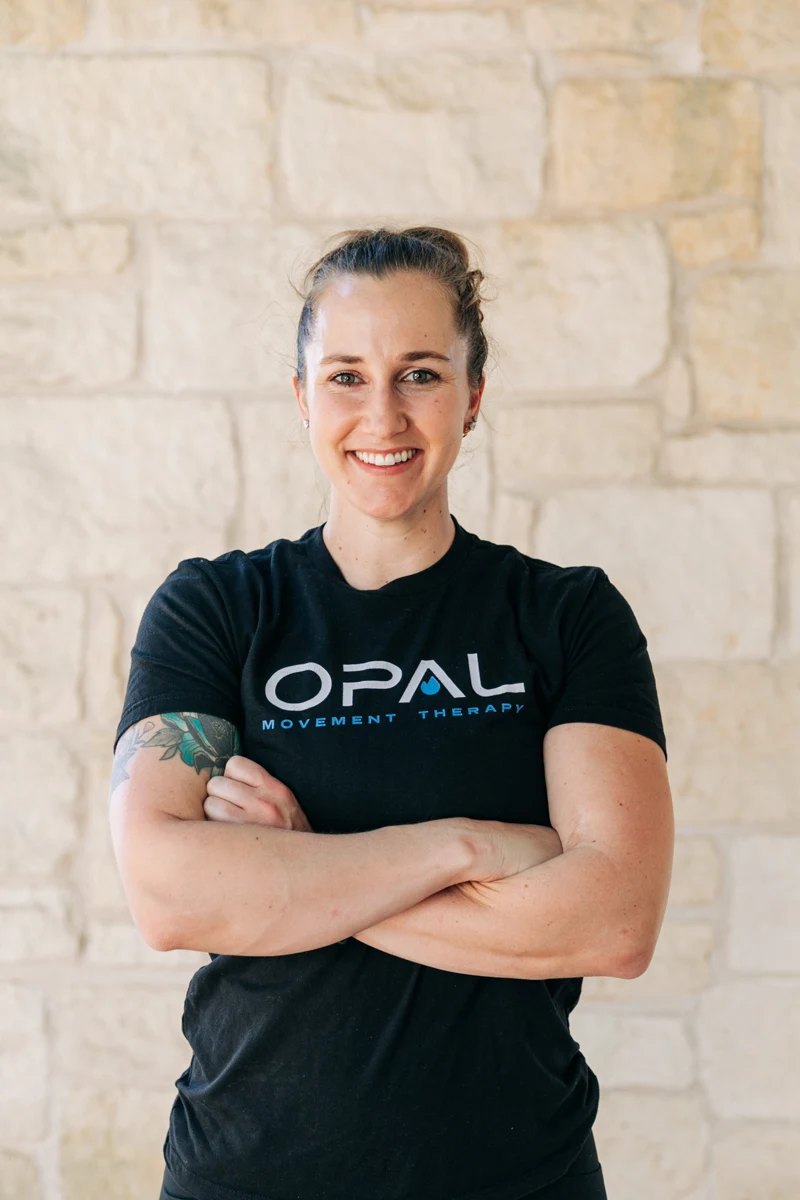
That's Morgan in the photo, in an OPAL Movement Therapy shirt. OPAL is the performance-focused physical therapy practice she founded, and the letters after her name, PT, DPT, FAAOMPT, are there on the PLTS+ page with her full bio. Outside the clinic she regularly teaches workshops and webinars for fitness and Pilates communities.
Three things to look at
Don't expect a list of exercises to cut from your plan. The session is about reading what you see in the room, and it uses three areas that feed into each other to do it. On paper they're thoracic mobility, shoulder mechanics and cervical muscle balance. On the mat that looks like an upper back that won't bend, a shoulder blade and arm that aren't sharing the work, and neck muscles that grab because they're out of balance.
Morgan's point is that compensation and overuse come out of those limits. So the fix in class usually starts somewhere other than the spot your client is rubbing.
Coaching it live
The session is built around coaching in real time, in the middle of a class, say at the second rep of a chest lift when you see the chin poke forward. Morgan works through assessing movement on the fly, picking a targeted cue, and reaching for a regression or a progression inside the ordinary Pilates exercises already in your plan, so the room keeps moving and the one client who needed help simply has a better hour.
A lot of that is cueing, so our guide on how to cue Pilates makes decent pre-reading, and Holly Swanson's breath and posture session was on the program first thing Sunday.
What it isn't
This one is for instructors, about teaching. If a client mentions ongoing or sharp pain, numbness or tingling, the right move is a referral to a licensed clinician, with a sentence about why.
Reading movement like this matters most in a full room, when there are ten necks to watch and only one of you. Our guide for the group Pilates instructor handling mixed levels goes into that.
When and where
It was the last workshop on Saturday. Maddie Conti's kettlebell session ended at 2:30, so there was a fifteen-minute gap to refill a water bottle before Morgan started. It ran Saturday, November 7, 2026, 2:45 to 4:45 PM Central, at 1809 Pearl St, Austin, TX 78701, followed by the STRENGTH Collective Happy Hour and Vendor Village. The other workshops are on the PLTS+ Collective page.
Questions
Does this workshop teach me to treat pain?
No. It stays on what an instructor can see and change in class; treatment is a clinician's job.
Is it reformer or mat?
The description talks about common Pilates exercises in general rather than one apparatus, so bring questions from whichever you teach.